Table of Contents
Introduction
A consultant walks into a factory that is close to bankruptcy, looks around for a few minutes, and says it looks like a warehouse, not a car plant. Then he tells the chief executive to cut the storage racks in half.
Those racks had stood in the building for years. Every person who worked there walked past them every day, and not one of them saw a problem. In this article, we'll look at why that happens, what the seven wastes look like when you finally see them, and three steps you can start this week. The short version is three words: go and look.
The Racks at Porsche
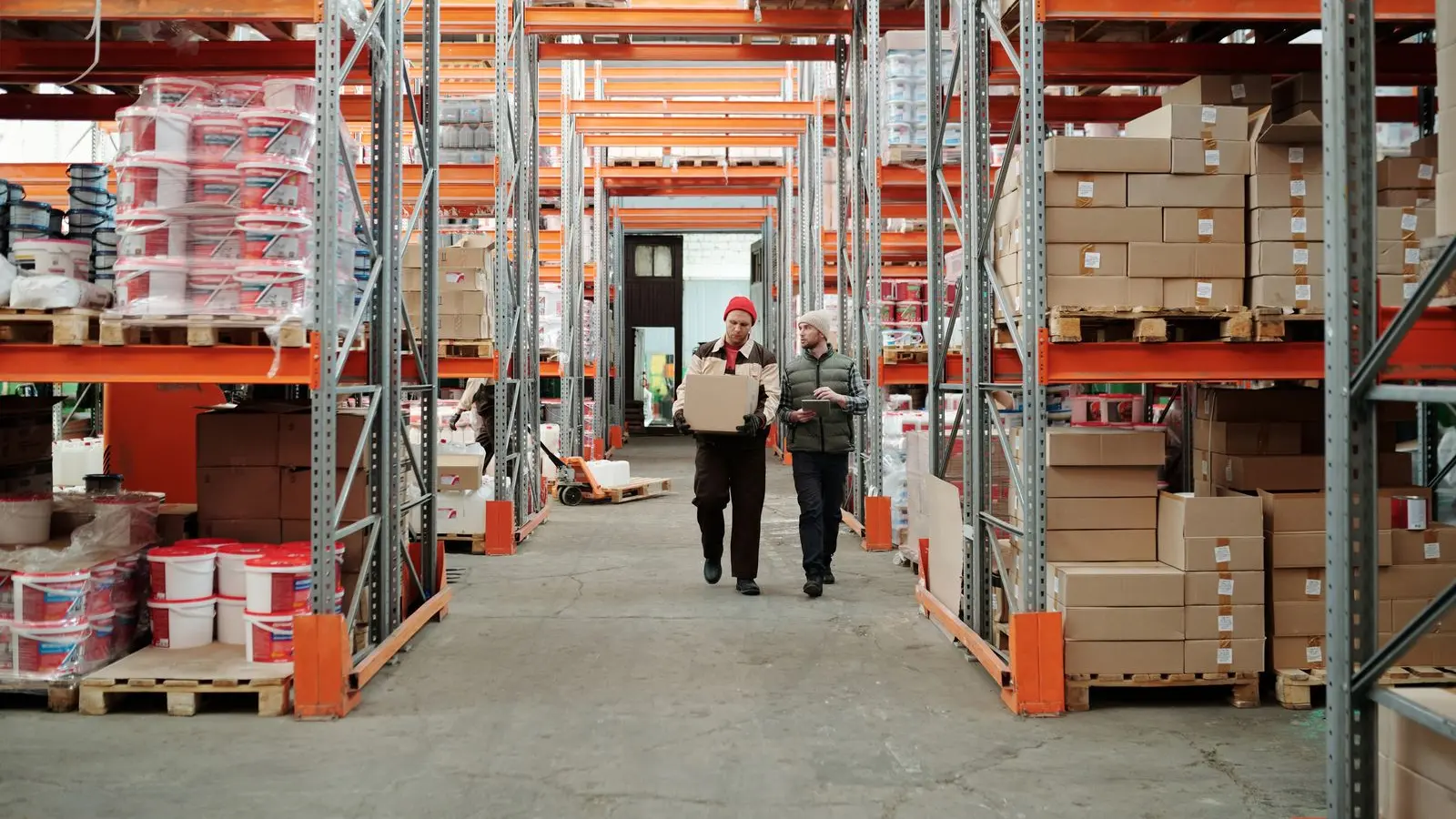
In the fall of 1992, Chihiro Nakao, a former Toyota engineer working with the Shin-Gijutsu consulting group, walked the floor at Porsche's Zuffenhausen plant. As IndustryWeek tells the story, he said the place looked more like a warehouse than a factory. The chief executive, Wendelin Wiedeking, then cut the metal shelving down to half height himself, in front of the workforce.
Cutting the racks was not the point. It removed the place where inventory could hide, so everyone had to ask what to do with the material that no longer fit. The Japanese name for the principle behind it is Genchi Genbutsu: go and see for yourself. We cover the principle in more detail in why a spreadsheet is never the shop floor.
Why You Stop Seeing Your Own Waste
This is not really about Porsche. After about six months in the same place, a problem stops looking like a problem and starts looking normal. That is not carelessness. The brain stops reporting what never changes.
"A visitor finds in one walk what the people who work there have missed for a year."
The people on your floor are not failing to look. They have simply looked at the same rack, the same pallet and the same detour so many times that none of it registers as information anymore. That is why the best observer on a floor is often the least qualified one.
The Seven Wastes and the One Everybody Misses
Taiichi Ohno, the Toyota engineer behind the Toyota Production System, listed seven kinds of waste. He called them muda, which simply means work that adds nothing. The standard list is transportation, inventory, motion, waiting, overproduction, over-processing and defects.
The Seven Wastes at a Glance
| Waste | What it looks like on a floor |
|---|---|
| Transportation | Moving material between places without changing it |
| Inventory | Stock waiting on racks, in crates, on pallets |
| Motion | People walking, reaching or searching for tools |
| Waiting | A part sitting still between two steps |
| Overproduction | Making more, or sooner, than the next step needs |
| Over-processing | Doing more work than the customer asked for |
| Defects | Rework, scrap and inspection |
Every factory can list them. Almost none can point to where each one is hiding this week. Waiting is the one everybody misses, because waiting makes no noise. A part sitting still looks the same as a part being worked on.
Strategies for Learning to See
1. Walk Somebody From Another Department Around Your Floor
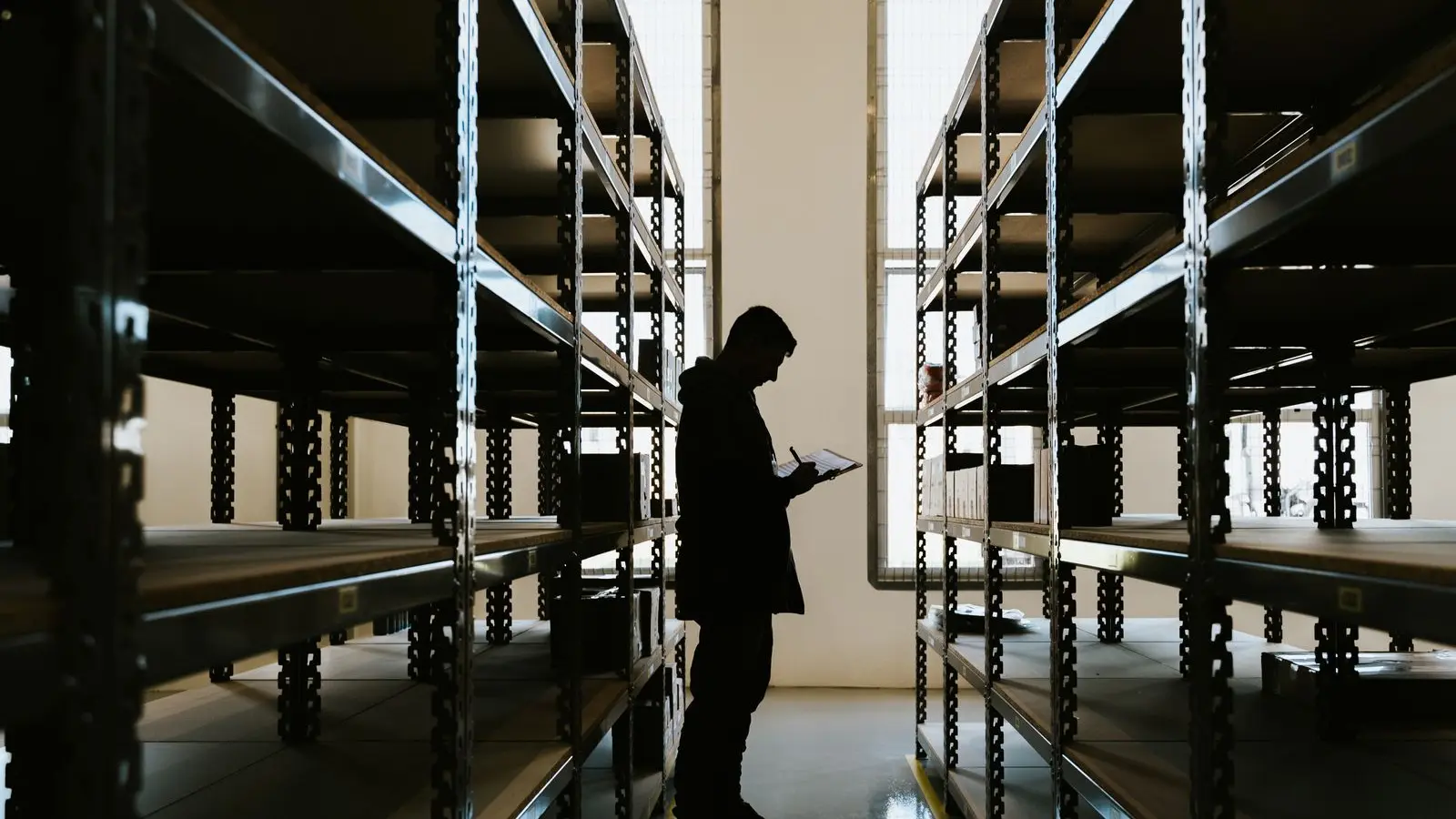
Ask what looks wrong. Write down everything and explain nothing. The moment the host starts defending a layout, the visitor stops reporting what they see.
Ground Rules for the Walk
- The visitor talks, the host listens: no explanations until the walk is over.
- Record everything: a photo and one line per observation.
- Sort afterward: decide what to fix once the walk is finished, not on the spot.
2. Give One Operator the Authority to Stop the Line
Toyota hangs a cord above the line, called an Andon cord. Andon simply means a signal anybody can see, and anybody on the line can pull it. We describe the same idea applied to hospitals in stop the line medicine. Give one operator the same permission, with nobody to ask and nothing to fear. It is not only for faults. It is for anything that looks wrong, long before it becomes a fault.
3. Follow One Part From the Gate to the Truck
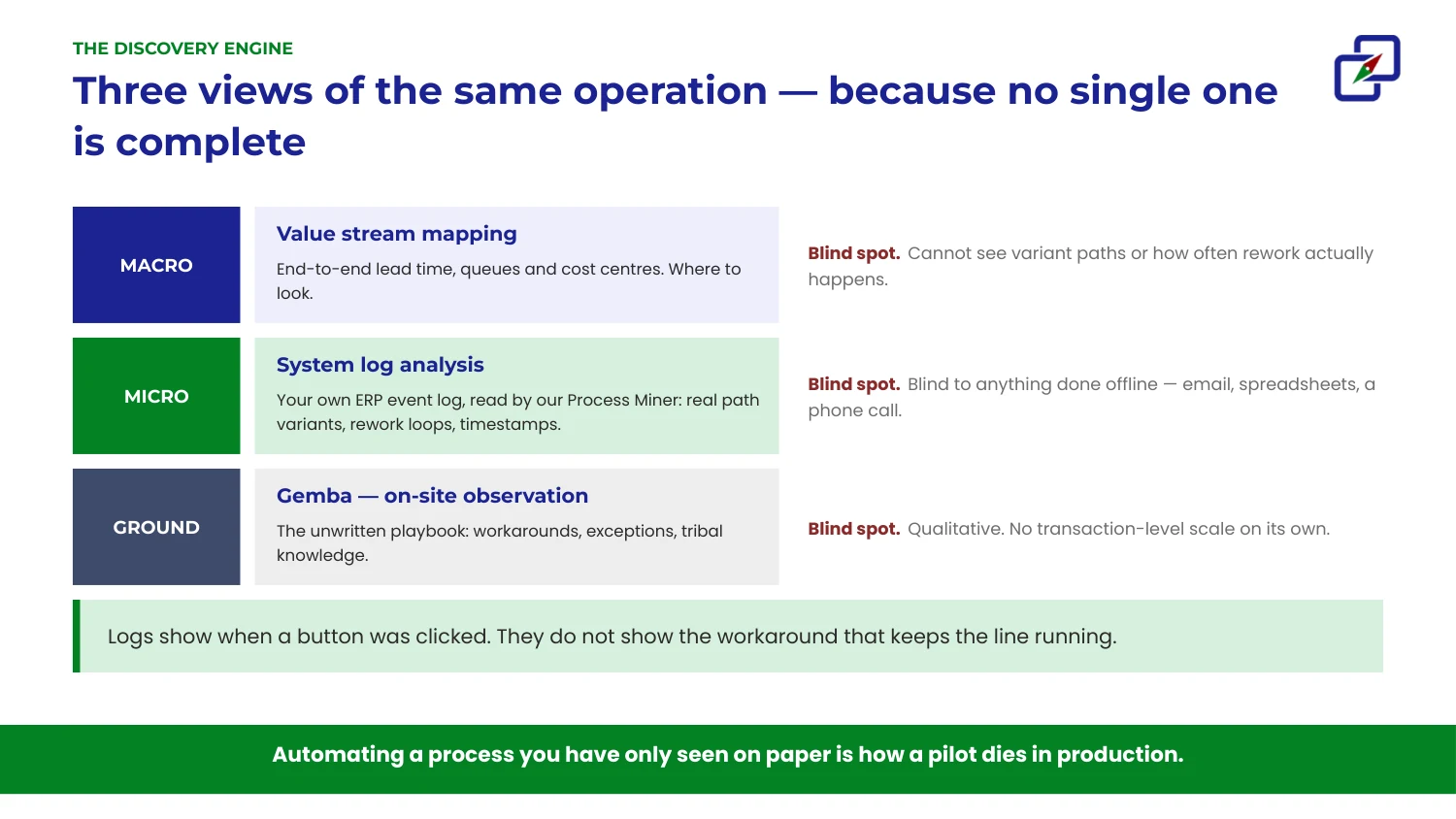
Pick a single part and follow it from the gate to the lorry, timing every step on your phone. Most of its life, it will be waiting. This is the same exercise as a value stream map, done with a stopwatch instead of a workshop.
Real-Life Case Studies
Case Study 1: Porsche, 1992
The racks at Zuffenhausen are the most-told story in this area because the lesson is so physical. Halving the shelving did not add a single machine or hire a single person. It changed what everybody could see, and what they had to deal with, every time they walked through the plant.
Case Study 2: Wiremold
Art Byrne joined Wiremold in late 1991. The Lean Enterprise Institute's account, How Wiremold Reinvented Itself Through Kaizen, reports throughput time falling from four to six weeks to two days or less, inventories cut by 80 percent, and sales doubling with profits tripling within three years. Punch press setup dropped from two hours to five minutes. The work was in seeing where time went, then removing it.
Case Study 3: A Manufacturer Stuck at 55 Percent
In our own work, a manufacturer with about $100 million in sales was delivering on time 55 times out of 100. We mapped the value stream, the whole path a part takes, and fixed the slowest steps with many small changes. On one repair line, a gap of nearly three days between two steps came down to four hours, worth $268,000 a year. None of it involved AI. Fix the work first: automating something nobody understands only makes the waste faster, a point we expand on in what belongs to RPA and what belongs to agentic AI.
Key Takeaways
- After about six months in one place, a problem starts to look normal, so the people closest to it are the least likely to report it.
- A visitor finds in one walk what the team has missed for a year.
- Of Ohno's seven wastes, waiting is the one everybody misses, because it makes no noise.
- Walk a visitor around, give one operator the power to stop the line, and follow one part from gate to truck.
- Fix the work before automating it, or the waste just moves faster.
FAQ Section
Q: Isn't this the same as a Gemba walk?
A: They are closely related. A Gemba walk is the practice of going to the place where the
work happens. This piece is about why the people who work there often cannot see their own
waste, which is why a fresh pair of eyes makes the walk useful. See our guide to
what a Gemba walk is.
Q: Why can't the people who work there see the problem?
A: A problem that never changes stops registering. After a few months in the same place it
looks like part of the furniture. That is not carelessness, it is how attention works, and it
is the reason a visitor finds in one walk what the team has missed for a year.
Q: Who should be the visitor?
A: Someone from another department, a supplier, a customer, or a new hire in their first
weeks. What matters is that they have no habit of ignoring what they are looking at.
Q: How do we keep the walk from feeling like an audit?
A: Write everything down and explain nothing. The visitor asks what looks wrong, the host
listens, and fixes are decided afterward by the team, not defended on the spot.
Conclusion
The waste you can see is already being handled. The waste that ruins you is the one everybody walks past. Seeing is a skill, and you lose it if you stop practicing.
So once a month, walk your own floor like a visitor. Go and look, and ask of every rack in the place what the consultant asked at Porsche: what is this here to hide? What did you walk past this morning that you stopped noticing a year ago? If you'd like a second pair of eyes on your floor, get in touch.