Table of Contents
Introduction
How does a company lose $1.2 million a year without a single monthly report flagging it?
It sounds implausible until you've seen it happen, and it happens more often than most finance and operations teams would like to admit. This raises an important question: if every department's numbers look reasonable, where does a seven-figure loss actually hide?
In this article, we'll walk through a real turnaround engagement where exactly that happened — a company was losing roughly $1.2 million a year, and nobody inside the building knew it, until someone walked the process that was generating the loss, start to finish, on foot.
The Hidden Factory: A Loss Too Distributed to See in Any Report
Every department's monthly numbers looked reasonable. That was the strange part. No single line on any report was red enough to trigger an investigation, because the loss wasn't concentrated anywhere — it was spread thin across dozens of small delays, minor rework loops, and a few workarounds that had quietly become "how we do it here." Individually, none of them were big enough to notice. Added up across a year, they were $1.2 million.
"Nobody was measuring the whole path — only their own segment of it."
Why the Loss Lived in the Handoffs
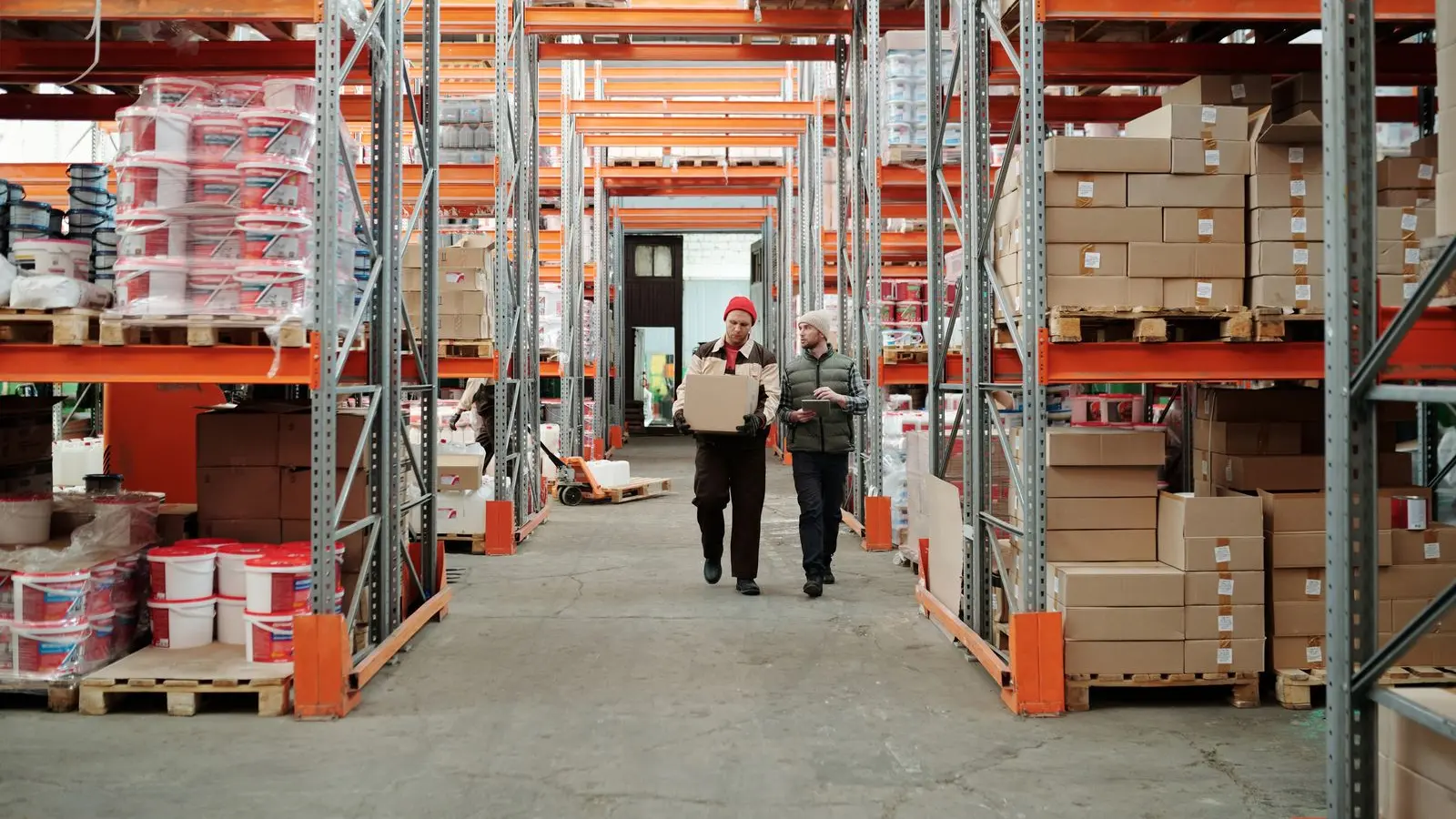
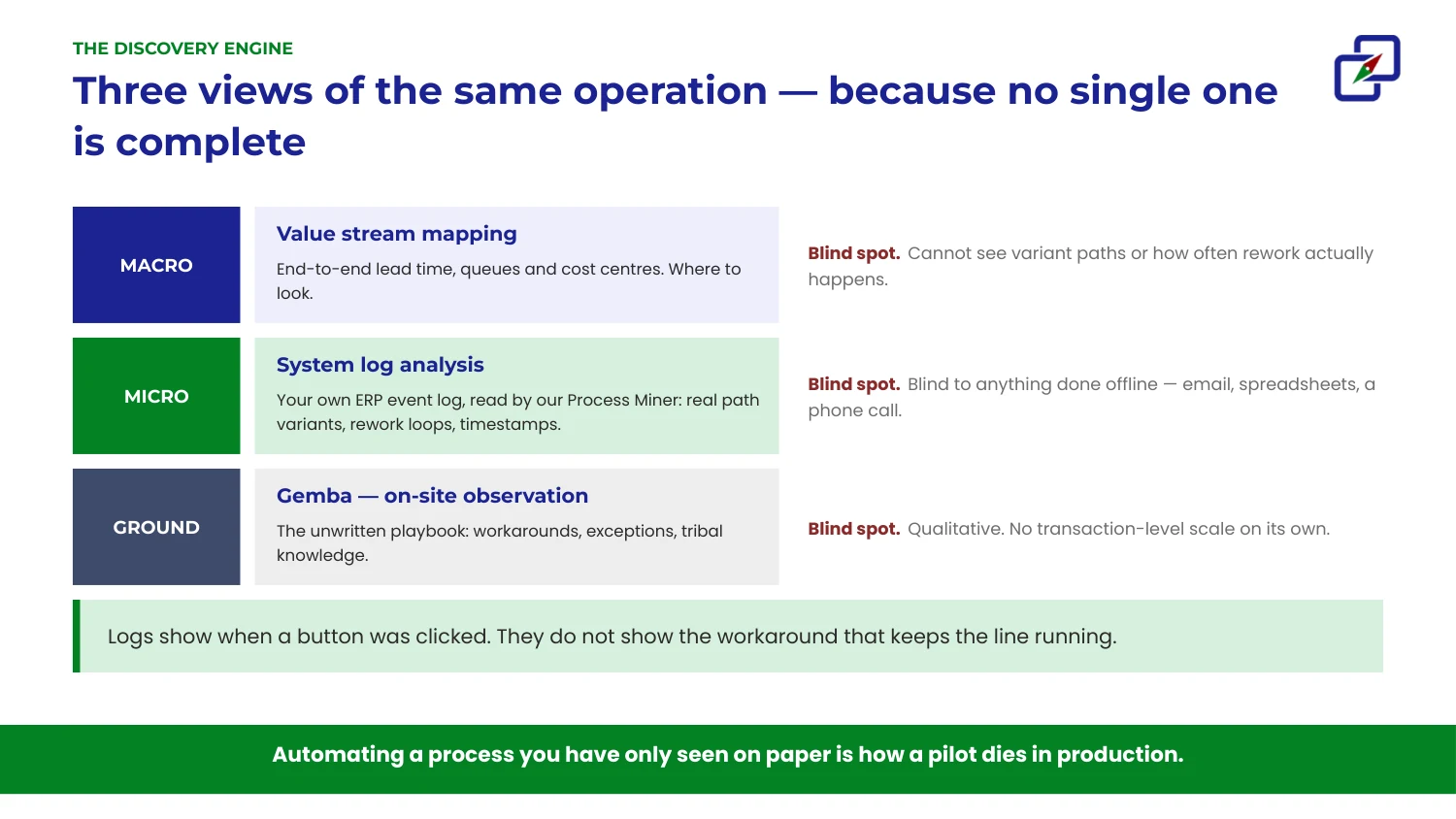
Once we walked the actual flow of work — following one unit through every station, shift change, and department boundary it crossed — the pattern became obvious in a way no dashboard had surfaced. The losses clustered almost entirely at handoffs: the point where one team's output became another team's input, where a shift ended and picked back up eight hours later, where a system that tracked inventory stopped talking to the system that scheduled labor.
Departmental Reporting vs. End-to-End Walk
| Aspect | Departmental Reporting | End-to-End Walk |
|---|---|---|
| Scope | One team's segment | Full path, start to finish |
| What it catches | Problems inside a department | Problems at the seams between departments |
| Ownership | Assigned per department | Nobody's, by default |
Factors That Let a Loss Like This Hide
- Reporting Organized by Department: Nobody owns the seams between departments, so nobody's report captures them.
- Individually Small Losses: No single delay or rework step was large enough to trigger a review on its own.
- Systems That Don't Talk to Each Other: Inventory, scheduling, and labor systems each told an accurate but incomplete story.
- No End-to-End Owner: Nobody's job was to track a single unit of work across its entire path.
Strategies for Finding Hidden Losses
1. Walk One Unit of Work, Start to Finish
Pick a single order, part, or patient and physically trace its path through every station, shift, and system boundary it crosses.
What to Track Along the Way
- Wait Time at Each Handoff: The time spent waiting between steps, separate from actual processing time.
- Undocumented Workarounds: Steps the official process doesn't mention but everyone quietly performs.
- System Boundaries: Points where data has to be re-entered because two systems don't sync.
2. Add Up the Small Numbers Before Dismissing Them
A five-minute delay repeated across every unit, every shift, every day of the year adds up fast — and it's exactly the kind of number that never appears large enough to flag in a single report.
3. Assign an Owner to the Whole Path, Not Just Each Segment
Handoffs stay invisible as long as no single role is accountable for the full journey. Naming an owner for the end-to-end path is what keeps this kind of loss from reappearing.
Real-Life Case Studies
Case Study 1: The $1.2M Manufacturing Handoff
The engagement described above is a real, representative example from our own turnaround work: a manufacturer whose department-level reporting looked healthy while roughly $1.2 million a year leaked out through shift-change delays and a scheduling system that didn't talk to inventory. A single day walking the floor, tracing real units of work end to end, surfaced more than months of departmental reporting had.
Case Study 2: The "Hidden Factory" Concept in Lean Literature
Lean and quality-management literature has long used the term "hidden factory" to describe the rework, scrap, and non-value-added activity happening inside a plant that never shows up as a distinct line item — commonly cited as consuming a significant share of total operating capacity in traditionally-run manufacturing operations, precisely because it's distributed rather than concentrated.
Key Takeaways
- A loss can be real, significant, and completely invisible to department-level reporting.
- Handoffs between teams, shifts, and systems are where distributed losses concentrate.
- Walking one unit of work end to end surfaces losses no dashboard organized by department can.
- Small, individually unremarkable delays add up fast when repeated across a year.
- Assigning ownership of the whole path, not just each segment, prevents the loss from reappearing.
FAQ Section
Q: How does a company bleed $1.2M a year without anyone noticing?
A: Because the loss was never concentrated in one line item anyone was watching. It was
distributed across dozens of small, individually unremarkable delays that never crossed the
threshold to trigger a review.
Q: Why didn't the existing reports catch it?
A: The reports were organized by department, and the loss crossed department boundaries. Each
team's numbers looked fine in isolation because each team was only ever measured on its own
segment.
Q: What's the first thing to look for on a walk like this?
A: Handoffs — the points where work, information, or material passes from one team, shift, or
system to another. No single owner is watching the seam.
Q: How long does it take to find a loss like this?
A: Often less time than expected. A single, well-structured walk of one unit's full path can
surface more than months of standard reporting, because it's looking in a place reporting
structurally can't.
Conclusion
In conclusion, the $1.2 million wasn't hidden because anyone was careless — it was hidden because the reporting structure was never built to add it up in one place. Finding it took a walk, not a new dashboard.
This kind of walk is a core part of how we approach a financial turnaround engagement, and it follows the same go-see discipline behind every Lean practice on this blog. If your own margin gap has been hard to pin down, let's walk it together.