Table of Contents
Introduction
Picture a complaint box with a padlock on it. People can put notes in. Nobody can see what happens to them. The story we are working from is a locked complaint box in Greece: complaints went in, and they never reached anyone who could act on them.
The details change in every retelling, but the pattern is familiar on shop floors, where suggestion cards disappear into a drawer. Google studied 180 of its own teams and found that psychological safety was the most important of five team dynamics: the belief that you will not be punished for speaking up. A box that swallows feedback teaches the opposite.
In this article, we'll look at what a locked box signals, how an open board differs, and five steps to turn feedback into a visible Kaizen engine.
What a Locked Box Tells People
When someone drops a complaint into a box and sees no response, they conclude that their input is ignored. The silence says management does not value transparency, and cynicism follows. The tool was meant to hear people. It becomes a barrier between them and the people who could act.
"If the box stays shut, the problem is not the tool. It is the habit of not answering."
This is why the fix is not more boxes. The tool is neutral. What matters is whether the people who raise a problem can see it move.
Locked Box vs Open Board
| Aspect | Locked box | Open board |
|---|---|---|
| Who sees a note | Whoever holds the key | Everyone who walks past |
| Status | Unknown | Tagged: new, in review, assigned, done |
| Owner | Nobody named | One person per item |
| When you hear back | Maybe never | By a stated due date |
| What people learn | Speaking up changes nothing | Speaking up gets a visible answer |
Strategies for a Board That Works
1. Take the Lock Off and Put the Board Where the Work Happens
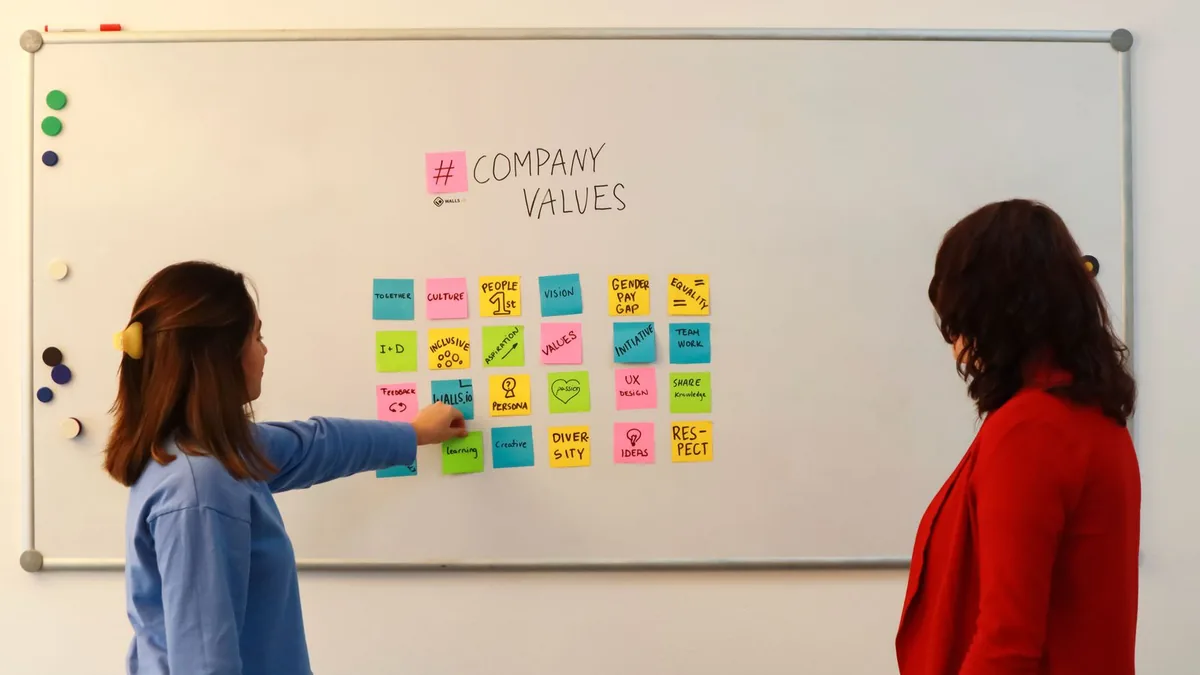
Replace the box with an open board at the team's daily huddle spot. Post every note publicly, and use colored tags to show status: new, in review, assigned, done. Anyone can see where an issue stands, so it cannot vanish.
2. Run Every Note Through the Same Four Steps
The Standard Workflow
- Collect: every note goes on the board, none held back.
- Tag: sort by type or impact so the board reads at a glance.
- Assign: one named owner per item, with a due date.
- Close: move the card to done only after the fix is confirmed where the issue started.
Naming one person and a date removes the guesswork. People know who to ask and when to expect an answer.
3. Review It Where the Team Already Meets
Look at the board in the daily stand-up and on gemba walks. A leader who walks past a note can verify the facts, ask about the root cause and agree on next steps on the spot. Leaders also set the tone by answering visibly. One common standard is a response within 48 hours, which you can adjust to your own pace.
4. Close the Loop on the Same Board
Finish each item with a short follow-up note, so the person who raised it sees the outcome. This is the step most boards skip, and the one that earns trust.
5. Measure Whether It Works
| Measure | What it tells you |
|---|---|
| Notes posted per month | Whether people believe it is worth writing |
| Average time from posting to done | How fast the loop closes |
| Percentage closed by the due date | Whether owners keep their commitments |
| Defect rate and lead time against a baseline | Whether small fixes add up to quality and delivery gains |
| A short trust survey | Whether people believe feedback leads to action |
Real-Life Case Studies
Case Study 1: Google's Project Aristotle
Google's team-effectiveness research looked at 180 teams and ranked five dynamics. At the top was psychological safety, ahead of dependability, structure and clarity, meaning and impact. The full guide is on Google's re:Work site. A feedback board is one concrete way to build it: each answered note shows that speaking up carries no penalty.
Case Study 2: Toyota's Andon Cord
On Toyota's lines, any worker can signal a problem and stop production to deal with it. That is jidoka in practice: the problem is visible and the response is immediate. The same logic works away from the line, as we describe in Stop the Line Medicine.
Case Study 3: What We See in Our Own Work
Boards fail in the same places that tools fail: when baseline trust is missing, as we argue in Trust Is the First Tool, and when gains fade after the first push, as in keeping Kaizen gains alive with a five-minute habit check. Our Kaizen events start from the same rhythm.
Key Takeaways
- A locked box tells people their input goes nowhere, and they stop giving it.
- Replace it with a visible board placed where the work happens.
- Run every note through four steps: collect, tag, assign one owner and a date, close.
- Review the board at the daily huddle and on gemba walks, and answer visibly.
- Measure time to done, percentage closed on time, and whether people trust the loop.
FAQ Section
Q: Why does a locked complaint box erode trust?
A: People put a note in and never see what happens to it. Silence reads as "nobody is listening", so they stop writing, or start talking to each other instead of to the people who could act. The box meant to collect voices becomes proof that voices do not count.
Q: How do I replace a complaint box with a Kaizen board?
A: Take the lock off and put a visible board where the work happens. Post every note, tag its status (new, in review, assigned, done), name one owner and a due date, review the board at the daily huddle or on a gemba walk, and close each item with a follow-up note on the same board.
Q: How do we measure whether the board is working?
A: Track the number of notes, the average time from posting to done, and the percentage closed by the due date. Compare defect rates and delivery lead times against a baseline taken before you started. Add a short survey on whether people trust that feedback leads to action.
Q: What if employees still hesitate to use the board?
A: Start with leaders. Have them post their own notes and answer them in public, and recognize teams that close items quickly. Consistent follow-up builds the psychological safety that makes people willing to write on a board everyone can read.
Q: What if we already have a digital suggestion system?
A: Keep it, and apply the same principles. Map its fields onto the board's columns, or copy the workflow into the tool: every item visible, one owner, one due date, and a closing note. The medium matters less than whether people can see what happens next.
Q: How do we handle a high-volume board without overload?
A: Put a work-in-progress limit on each column and hold a short triage each morning to route new items. The aim is a board that stays actionable, so an item is either moving or has a stated reason it is not.
Q: Can this work outside manufacturing?
A: Yes. Any process that receives feedback benefits from making it visible, naming an owner and closing the loop on the same board. Help desks, call centers, retail floors and hospital wards can all have a version of the locked box.
Q: Can we add AI to analyze feedback before our Lean basics are stable?
A: Not as a first step. If the feedback process is not repeatable, AI will summarize noise and can hide the process problem behind a tidy report. Standardize the loop first, then add AI where it removes work. Lean builds the standard, and digital intelligence acts on it.
Conclusion
Back to the padlock. The box was never the problem, and a better box would not have fixed it. What was missing was a visible route from a note to an answer. Take the lock off, show where every note stands, and answer each one on the same board.
What happens to the last complaint your team raised? If you would like help building the habits around a board like this, get in touch.