Table of Contents
- Introduction
- Productivity vs Efficiency: What's the difference?
- The Impact of Productivity and Efficiency in the Workplace
- How Lean Principles Raise Productivity
- Factors That Decrease Productivity
- Strategies to Improve Productivity and Efficiency
- The Importance of Employee Engagement
- The Role of Technology in Enhancing Productivity and Efficiency
- Real-Life Case Studies
- Key Takeaways
- FAQ Section
Introduction
Have you ever felt overwhelmed by endless tasks, wondering whether you're working efficiently or productively?
Most of us use the two words as if they meant the same thing. They do not. This leads us to an essential question: What's the difference between productivity and efficiency, and why does it matter?
In this blog post, we will explore the intricate balance between productivity and efficiency, how they impact our work environment, and what we can do to enhance both for a thriving workplace.
We'll also cover practical strategies, real-world examples, and insights from industry leaders that can help us navigate this crucial aspect of our professional lives.
Productivity vs Efficiency: What's the difference?
In short: productivity is how much you produce for the resources you put in, output divided by input. Efficiency is how little of those resources go to waste on the way. A third idea, effectiveness, asks whether you are producing the right thing at all.
What is Productivity?
Productivity refers to our ability to create more value with the same input. It's about maximizing our output while maintaining the same level of resources. For example, when we implement new strategies or technologies that allow us to achieve more in less time, we boost productivity.
What is Efficiency?
On the other hand, efficiency focuses on optimizing processes to do the same amount of work with less effort or cost. It answers the question: How can we streamline our tasks? While efficiency is crucial, solely focusing on it can lead to missed opportunities for growth and innovation.
Key Differences
| Aspect | Productivity | Efficiency |
|---|---|---|
| Definition | Creating more value with the same input | Doing the same work with less effort |
| Focus | People and culture | Processes and automation |
| Goal | Increase output | Reduce costs and time |
"Efficiency is doing things right; effectiveness is doing the right things."
The line is often credited to Peter Drucker, who drew the distinction between effectiveness and efficiency in a 1963 Harvard Business Review article and in The Effective Executive (1967). Quote Investigator traces the history of the wording.
A Worked Example
These numbers are illustrative. A cell of 5 operators makes 400 units in an 8-hour shift, which is 40 labor hours. Productivity is 400 ÷ 40 = 10 units per labor hour.
Now suppose the team removes one hour of waiting for parts per shift, so the same 400 units take 35 labor hours. Productivity rises to about 11.4 units per labor hour, a gain of roughly 14%, with no new machine. Cutting the waste is the efficiency gain. The higher output per hour is the productivity gain.
The Interdependence of Productivity and Efficiency
It's important to recognize that productivity and efficiency are not mutually exclusive; they are interdependent. A highly efficient process may not lead to increased productivity if it doesn't consider the people involved. Conversely, focusing solely on productivity without looking at the efficiency of processes can lead to burnout and frustration among employees.
The Impact of Productivity and Efficiency in the Workplace
Balancing Productivity and Efficiency
In a world that often prioritizes efficiency over productivity, it's essential to find a balance. Overemphasizing one can lead to detrimental outcomes. For instance, if leaders push for efficiency without considering employee morale, they may inadvertently create a toxic work environment.
Real-World Example: The Case of Company X
Consider Company X, a tech firm that focused exclusively on efficiency by automating many processes. Initially, this approach led to significant cost savings. However, employee engagement plummeted as team members felt their input was undervalued. The company soon realized that while their processes were efficient, they were losing valuable insights from their talented workforce. By shifting focus back to productivity — encouraging collaboration and valuing employee contributions — they managed to restore morale and ultimately achieved higher output.
The Role of Lean Manufacturing
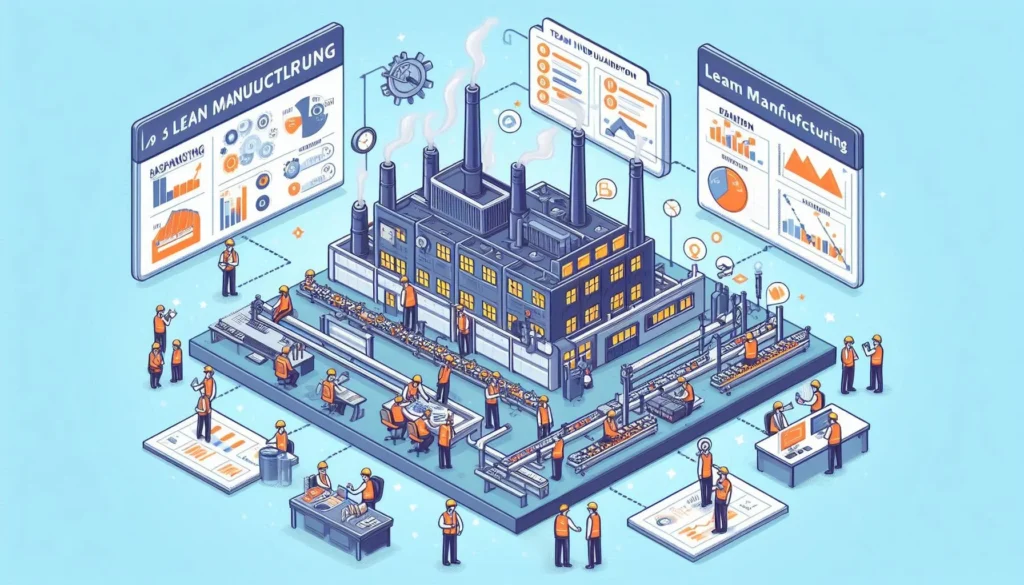
One approach to achieving this balance is through lean manufacturing. Lean principles focus on eliminating waste while improving productivity. By adopting lean methodologies, companies can benefit from both enhanced efficiency and increased productivity.
What is Lean Manufacturing?
Lean manufacturing is a production practice that considers the expenditure of resources in any aspect other than the direct creation of value for the end customer to be wasteful and thus a target for elimination. This methodology seeks to enhance productivity while minimizing waste — be it time, materials, or labor.
How Lean Manufacturing Helps
- Reduces Waste: By streamlining processes, organizations can eliminate unnecessary steps.
- Improves Quality: Lean practices encourage continuous improvement, resulting in higher quality outputs.
- Boosts Employee Engagement: A lean culture builds respect and collaboration among team members.
"Lean thinking is about eliminating waste while maximizing value."
How Lean Principles Raise Productivity
Each of the five Lean principles removes a different kind of waste, and what the waste used to consume goes into output instead.
| Lean principle | What it removes | How productivity rises |
|---|---|---|
| Value | Work the customer does not pay for | Labor goes to what customers want |
| Value stream | Steps that add no value | Fewer steps for every unit |
| Flow | Waiting and queues | Less idle time per unit |
| Pull | Overproduction and excess inventory | Output follows demand, not a forecast |
| Perfection | Repeat problems and rework | Small gains compound |
Tools such as 5S, kanban, SMED and standardized work put these principles into practice on the floor.
Factors That Decrease Productivity
Understanding what can hinder productivity is crucial for improvement. Here are some common factors:
- Poor Communication: Lack of clear communication can lead to misunderstandings and mistakes.
- Ineffective Workflows: Disorganized processes can create bottlenecks that slow down progress.
- Lack of Motivation: Employees who feel undervalued or unmotivated are less likely to be productive.
- Unclear Objectives: When team members don't understand their goals, it can lead to wasted effort and confusion.
Recognizing these barriers allows us to implement strategies for overcoming them.
Strategies to Improve Productivity and Efficiency
1. Streamline Processes
We can start by identifying bottlenecks in our workflows. By analyzing and optimizing these areas, we can boost efficiency without sacrificing productivity.
Tools for Streamlining
- Value Stream Mapping/Process Mapping: Visualizing workflows helps identify inefficiencies.
- Automation Software: Tools like Zapier or Asana can automate repetitive tasks.
- Kanban Boards: These boards visualize tasks and help manage workflow effectively.
2. Build a Lean Culture
Encouraging a culture that values continuous improvement can lead to sustained productivity gains. This involves training employees in lean practices and inviting them to suggest improvements.
Implementing Lean Culture
- Training Programs: Regular workshops on lean principles keep employees engaged.
- Feedback Loops: Establish channels for employees to propose improvements.
- Recognition Systems: Reward teams for successful lean initiatives.
3. Implement Lean Tools and Techniques
Utilizing tools such as Kanban boards can help visualize tasks and streamline workflows. These tools enhance visibility and accountability within teams.
Examples of Lean Tools
- Value Stream Mapping: Identifies value-added activities versus non-value-added activities.
- 5S Methodology: Sort, Set in order, Shine, Standardize, Sustain — organizes workspace for efficiency.
- Kaizen Events: Focused improvement events that encourage team collaboration.
4. Measure and Track Performance
Regularly measuring productivity levels allows us to identify areas for improvement. Establishing key performance indicators (KPIs) related to both productivity and efficiency can guide our efforts.
Key Performance Indicators (KPIs)
- Output per Hour: Measures the amount produced in a specific time frame.
- Employee Engagement Scores: Gauges how motivated employees feel.
- Process Cycle Time: Tracks the time taken from start to finish of a task.
The Importance of Employee Engagement
Why Engagement Matters
Engaged employees tend to be more productive and efficient. When team members feel valued and connected to their work, they perform better. In Gallup's 2012 meta-analysis of 49,928 work units, units in the top quartile for engagement outperformed the bottom quartile by 22% in profitability and 21% in productivity.
Strategies to Boost Employee Engagement
- Provide Opportunities for Growth: Encourage continuous learning through workshops or courses.
- Recognize Contributions: Celebrate individual and team achievements regularly.
- Encourage Open Communication: Create an environment where feedback is welcomed.
"Engagement is not just about making employees happy; it's about creating a culture where employees are motivated to contribute."
The Role of Technology in Enhancing Productivity and Efficiency
Embracing Digital Tools
Technology plays a crucial role in enhancing both productivity and efficiency. By leveraging digital tools, teams can streamline workflows, improve communication, and automate repetitive tasks.
Essential Tools for Teams
- Project Management Software: Tools like Trello or Monday.com help manage tasks effectively.
- Time Tracking Apps: Applications like Toggl assist in measuring time spent on tasks.
- Collaboration Platforms: Tools like Slack or Microsoft Teams facilitate better communication among team members.
The Future of Work: Hybrid Models
The shift toward remote work has changed how we think about productivity and efficiency. Hybrid models allow flexibility while maintaining team collaboration.
Benefits of Hybrid Work Models
- Increased Flexibility: Employees can choose when and where they work best.
- Better Work-Life Balance: Reduced commute times lead to happier employees.
- Access to Global Talent: Companies can hire from a wider talent pool.
Real-Life Case Studies: Companies Balancing Productivity and Efficiency
Case Study 1: Toyota's Lean Manufacturing
Toyota is often cited as a pioneer in lean manufacturing principles. By continuously refining their production processes, they have managed to reduce waste while enhancing quality. Their commitment to efficiency has resulted in lower costs and higher customer satisfaction.
Case Study 2: Google's Employee-Centric Culture
Google is known for its emphasis on employee well-being and engagement, including collaborative spaces designed to encourage teamwork and idea-sharing. It is an example of the engagement side of the balance. We are not citing a measured productivity result for it, only the approach.
Key Takeaways
- Understand the difference between productivity and efficiency.
- Strive for a balance between the two for optimal workplace success.
- Implement lean manufacturing principles to enhance both productivity and efficiency.
- Regularly measure performance to identify areas for improvement.
- Build employee engagement for sustainable growth.
FAQ Section
Q: What is the difference between productivity and efficiency?
A: Productivity is how much you produce for the resources you put in: output divided by input. Efficiency is how little of those resources are wasted along the way. A team raises productivity by producing more per hour, and raises efficiency by cutting waiting, rework or scrap.
Q: How do Lean principles improve productivity?
A: Lean principles remove waste: work the customer does not want, steps that add no value, waiting, overproduction and repeat problems. The time and material that waste used to consume go into output, so the same resources produce more.
Q: Why is it important to differentiate between productivity and efficiency?
A: Understanding the distinction helps leaders create strategies that enhance both aspects without compromising one for the other.
Q: How can I improve my team's productivity?
A: Focus on building motivation, setting clear objectives, implementing effective workflows, and utilizing technology.
Q: What tools can help improve efficiency?
A: Lean tools like Kanban boards, process mapping software, automation applications, and project management platforms are effective in streamlining tasks.
Q: How does employee engagement affect productivity?
A: Engaged employees are more motivated and tend to produce higher quality work, leading to improved overall productivity.